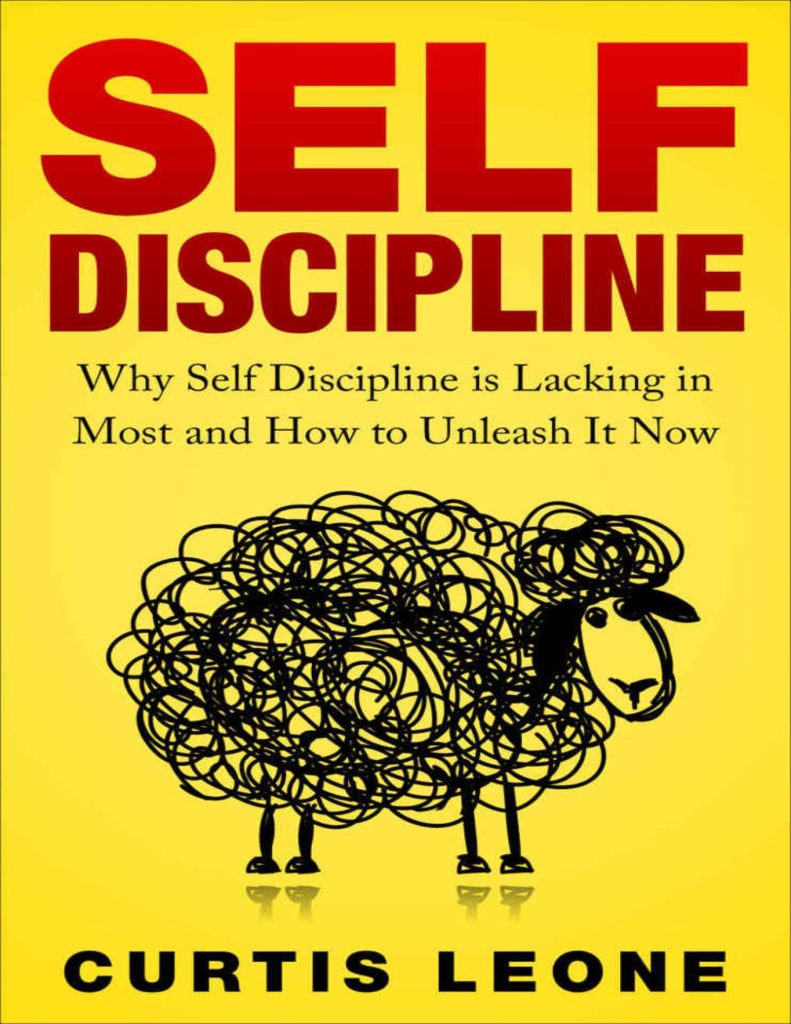
About This Book
Self Discipline Mindset is a self-development text whose title states its thesis: self-discipline is a mindset before it is a behaviour — a way of thinking about oneself from which consistent action follows. The destination heading gives the exact title; the file served there, ‘Self Discipline Mindset.pdf’, carries the exact title as its filename — the same book under the filename the site serves it by. The book’s work is relocation: moving discipline from the will, where it is scarce and exhaustible, to identity, where it compounds.
Everyone who has kept a resolution for exactly eleven days knows the standard model’s flaw: it runs on motivation, and motivation is a visitor. The mindset argument begins by firing the visitor. What replaces it is not grimmer effort but earlier decision — the disciplined person, in this account, is not the one who wins a hundred daily arguments against temptation but the one who stopped scheduling the arguments, because the questions were answered once, at the level of identity, and are not reopened at the level of appetite. Psychologically the move is sound: behaviour that expresses who someone takes themselves to be is self-maintaining, while behaviour performed against self-image taxes every repetition, which is why the same routine is a burden to one person and simply ‘what I do’ to another. A serious treatment also refuses the genre’s two corruptions. It does not promise that mindset abolishes difficulty — the early mornings stay early — and it does not sell self-punishment dressed as discipline, because a regime powered by contempt collapses the first time it is most needed. What it offers instead is engineering: environments arranged so the settled decision is easy to keep, standards small enough to be unbreakable on the worst day rather than heroic on the best, and lapses processed as data instead of verdicts. The reader who finishes such a book owns less inspiration and more machinery, which is the correct exchange rate in this section of the shelf.
What Learners Will Practise
Deciding at the Level of Identity
Readers practise moving each recurring obligation out of daily debate and into settled identity — the question answered once, upstream, so the day’s appetite never gets a vote. The practised unit is the pre-decision: fewer arguments scheduled means fewer arguments lost.
Systems over Motivation
The book practises replacing mood-dependent effort with environment and routine: the hour fixed, the tools laid out, the friction removed from the right action and added to the wrong one. Systems keep working on the days their designer feels nothing, which is most of the days that decide outcomes.
Lapses Processed as Data
Readers practise the disciplined response to failure — record, diagnose, adjust the system, resume — instead of the two amateur responses, denial and self-contempt. A mindset that survives its own lapses is the whole product; everything else in the genre is decoration.
Key Features
The identity-first thesis is the feature: discipline relocated from willpower to self-concept. The engineering honesty is the second — environments and small unbreakable standards over heroic effort — and the shelf fit the third, the foundation stone of this list’s self-development section. On this shelf it opens that section here.
Who This Book Is For
Professionals whose ambitions outlast their motivation are its first audience. Students form its second readership, building study systems that survive distraction and season. Resolution veterans make its third, ready to trade the annual cycle of vow and collapse for machinery that holds.
How to Use This Book
Convert as you read: each idea must leave the page as one pre-decision and one environmental change within twenty-four hours, or it remains literature. Set the floor, not the ceiling — the standard you keep on your worst day is your real standard, so make it small enough to be beneath contempt and impossible to break. Review lapses weekly in writing, hunting the system’s flaw rather than your character’s; the log converts shame into engineering, which is this mindset’s daily practice.
Related Books
The grammar practice hall stands at Practice Makes Perfect English Grammar Book, and the measurers of risk at Quantitative Financial Risk Management.