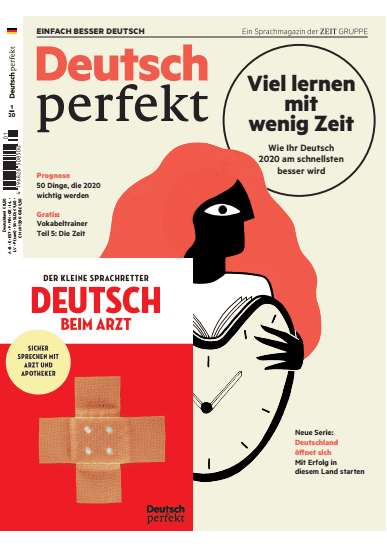
About This Book
Viel Lernen mit wenig Zeit is a German-learning book designed around the scarcest resource its readers own: time. Its title states the contract in German — much learning, little time — and the book’s every decision flows from that ratio. Material is selected the way an engineer selects under a weight limit: each item must justify its cost in minutes by the German it unlocks, and the merely decorative, however traditional, is left on the platform.
This efficiency-first design quietly reverses the usual course’s economics. Ordinary books spend the learner’s time as though it were free and infinite, marching through completeness for its own sake; this one knows its reader is counting. The consequence is a distinctive texture: dense but never heavy, fast but never rushed, with each short engagement engineered to leave the learner visibly further along — because a busy learner who cannot see progress by Friday will not be a learner by the Friday after.
What Learners Will Practise
High-Yield German First
Learners practise the German that pays: the structures and words whose frequency in real language makes every minute spent on them return a hundred meetings. The practice is prioritisation made visible — the learner always knows why this item, now — and the knowledge itself motivates, because nothing corrodes a busy person’s study like the suspicion that the hour went to something Germany rarely says.
Short Sessions, Fully Spent
The book is practised in the fragments real life provides, and it trains the learner to use fragments completely: a session that begins instantly, wastes nothing on warm-up, and closes with the thread parked ready for tomorrow’s fragment. Learners discover that the unit of progress is not the hour but the finished small thing, and that five finished small things a week outrun the monthly marathon that life keeps cancelling.
Compounding Review
With little time, forgetting is the enemy that matters, and learners practise review as engineering rather than virtue: earlier material resurfaces inside later material at the moments memory needs it, so review costs no separate minutes. The practice converts the busy learner’s nightmare — a sieve for a memory — into a ratchet, each session’s German locked in by the sessions that follow it.
Key Features
The yield-per-minute selection is the feature: every item earning its minutes or excluded. The fragment-ready design is the second — sessions sized for real calendars — and the built-in compounding the third, review folded into progress so nothing bought is lost. In this collection it is the German shelf’s time machine: the same German, reached in a fraction of the hours other books would charge.
Who This Book Is For
Working adults are its first readers — professionals whose German must be built around a job, not instead of one. Parents form its second readership, studying in the arithmetic of naps and commutes. The ambitious impatient make its third: learners who do not object to effort, only to waste, and who will forgive a book anything except spending their hour on German they will never meet.
How to Use This Book
Feed it fragments daily rather than feasts weekly: its engineering assumes the ratchet of short returns. Keep it where the fragments happen — the bag, the phone’s side, the kettle’s counter — because a book that must be fetched will be skipped. Track yield, not time: note what German each session made usable, and let the visible compounding, rather than the clock, tell you the method is working.
Related Books
The high-yield words themselves are counted in the German English Frequency Dictionary – Essential Vocabulary 2500 Most Used Words 783 Most Common Verbs, and the learner’s desk companion stands in the McGraw-Hills German Student Dictionary.